
Even if you don’t care about art, this paradox might intrigue you.

It feels like there shouldn't be much of a difference between seeing a painting in person and simply settling for a high-quality reproduction. But as someone who has stared at countless original masterpieces, I’ve come to realize that the original and the print are two entirely different objects.
A good reproduction can show you the general composition and a decent approximation of the colors. But it is completely powerless against the sense of scale and the actual texture of the paint. A print is flat; it’s born from a printing press, made of tiny raster dots.
Now, imagine a small thought experiment: you make a copy of a reproduction, then a copy of that copy, repeating the process a hundred times. By the hundredth iteration, the original image will have completely dissolved. We would likely end up with something abstract, pixelated, and of questionable value — a dead simulacrum.
Why does this matter? Because every digital layer inevitably distorts the truth. It is only when you stand face-to-face with the original work — feeling the weight of the brushstrokes — that you can truly capture the fleeting meaning the artist left behind.
Have you ever found yourself standing in a museum, realizing that the original painting leaves a completely different impression than the version on your phone screen or in a book? Or perhaps, has an original ever deeply disappointed you?
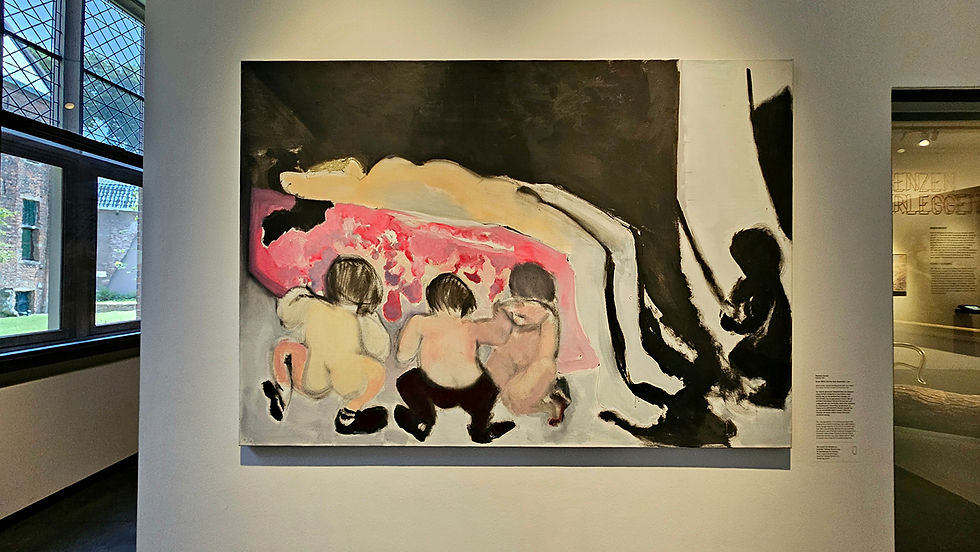
By the way, the original works of Marlene Dumas Snow White and the Next Generation, 1988 (pictured here) are unsurpassed, striking, and utterly astonishing in their mastery.


Comments