
Dutch papierknipkunst

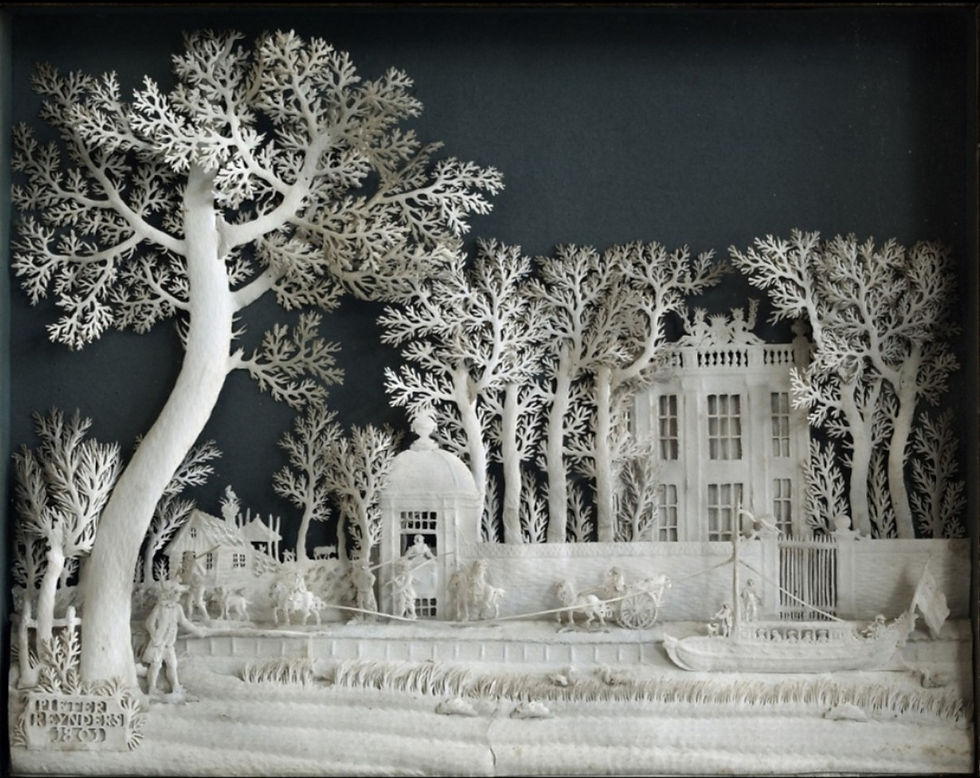
In the Netherlands, paper cutting (papierknipkunst) constitutes a well-established artistic tradition that emerged in the seventeenth century and continues to develop actively today. The technique is based on creating decorative and narrative compositions from a sheet of paper using scissors or a knife, encompassing a wide range of forms — from silhouettes and ornamental designs to complex figurative scenes. For museum practice, this field is significant as an example of the synthesis of craft and visual art, as well as a component of both tangible and intangible cultural heritage.
The systematization of information on artists, schools, and the historical evolution of Dutch paper cutting is provided by the online resource Knipperslexicon, which contains biographical data, bibliographic references, and contextual information useful for scholarly description and attribution. The tradition is most comprehensively represented in a museum context at the Museum van Papierknipkunst, where historical and contemporary works are exhibited and educational and demonstrative programs are implemented to facilitate interpretation for diverse audiences.
Thus, Dutch papierknipkunst constitutes a significant object of collecting, research, and museum communication, enabling interdisciplinary connections between art history, ethnography, and the preservation of craft traditions.


Comments